Featured

Colour is Good!

“O Tiger Lily I wish you could talk” says Alice in the Garden of Live Flowers, “we can talk” the Lily replies, “when there’s anybody worth talking to”.

I remember as a very young child of about six asking what that beautiful tall golden yellow plant was flowering a the back of my mother’s border, Golden Rod was the reply;  no longer fashionable this is a plant that can be little invasive and for that reason rarely planted now.

Many books have been written about childrens’ adventures in gardens, Lewis Carol in ‘Through the Looking Glass’ (1871), ‘The Secret Garden’ by Frances Hodgson Burnett (1911) wherein the orphaned Mary finds the key to her uncle’s locked walled garden. Phillippa Pearce’s ‘Tom’s Midnight Garden’(1958), about a boy who travels back in time to visit a Victorian garden every time the clock strikes midnight.

Alice in Wonderland

I am sure all of you will have a favourite childhood memory of sights and smells within the garden, the scent of lilac on the air, the pungent smell of tomatoes in the greenhouse and sweet strawberries warm and glowing red in their straw bed, a confetti of blossom floating down to earth, the dry rustling of autumnal leaves as one kicks ones way through them. 

The young are never judgemental, they have a simpler, more direct relationship with the world around them, it is as we grow older that our taste becomes more sophisticated and we learn what is considered to be fashionable and beautiful.  

Gardeners can be terrible snobs.  The list of plants condemned to be common are endless.  

Fuschias, which some people think to be completely beyond the pale but which I adore. The flowers like little ballerinas, I still love to pop their buds. Petunias, how could anyone not enjoy their wonderful scent?

Dahlias were thought until very recently to be dead common until the Bishop of Llandaft came on the scene, its deep red jewelled petals and its dark plummy foliage and suddenly here was a dahlia that we could plant in our gardens and not be looked down upon. As a child I remember being fascinated by the earwigs that lurked within their petals and loving their bright colours.

Ah, colour, now there is another gardening pitfall one can fall into.  I have a friend who loathes yellow flowers.  I have even more friends who loathe orange and I have many, many, friends who love white gardens. Now I do appreciate that white gardens are beautiful, romantic and atmospheric but we suffer such long periods of grey/white skies in this country that it is wonderful to have a spot of colour in the garden when we can.

The bright blue of forget-me-nots which come free from God; some consider them to be weeds and ruthlessly pull them out, unless, as observed with amusement by my gardener, you pay a fortune to buy them from the local garden centre. 

Snobbery concerning plants is not a new thing. A gentleman by the name of Samuel Gilbert in 1682 omitted from his gardens ‘obsolete and over dated flowers’. 

When the famous horticulturalist John Rea wrote his book ‘Flora’ in 1665, he referred to lilies, peonies, daffodils and tulips as the ‘more ordinary’ and ‘the red lily as a vulgar flower, there are three others of some regard, fairer than any of the common sorts’.

Perhaps we should all try and regain that childish freshness of thought and not be afraid to stand up to the gardening snobs and plant what we like in our gardens, be it yellow, orange or the happy chaos of ‘weeds’.

Featured

Chenies Manor

Photograph by Mark Percy

Elizabeth Macleod Matthews, chatelaine of Chenies Manor died in April 2016. An amazingly stalwart and resourceful lady, for a period of over fifty years she painstakingly resurrected the gardens of Chenies with a lot of back aching work and great panache. 

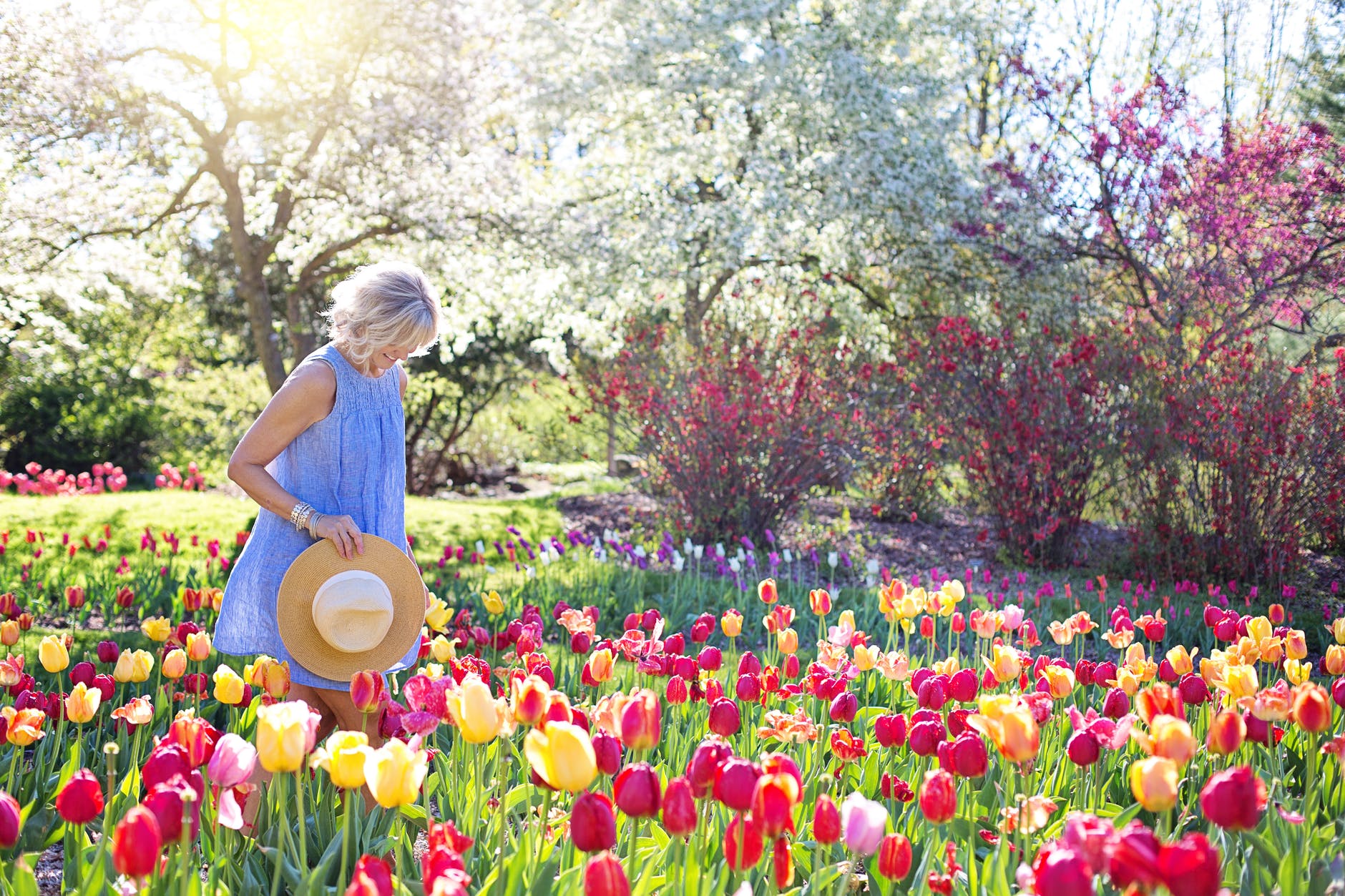
It is not my purpose on this occasion to discuss the present gardens; the thousands of jewelled tulips in the spring, the blazing Mexican colours of the dahlias in the summer, they are there for all to see.

The history of Chenies is ancient.  From 1180 until 1523 it was owned by the Cheyne family.  In 1523 Anne Sapcote who had inherited Chenies Manor, married into the Russell family who were to become the Dukes of Bedford. 

Royalty was regularly entertained at Chenies.  Henry the Eighth with his queen, Anne Boleyn and their daughter Elizabeth staying for a week in 1534. In 1541 Henry again visited Chenies, this time with a new wife, Kathryn Howard. Later in the next century Queen Elizabeth visited several times, staying for one month in 1570, the longest visit recorded to any subject’s house.  The gardens would have been on a scale to reflect this. 

Two hunting parks lay to the West and South West, one of the parks was of 484 acres which Elizabeth would certainly have enjoyed, hunting was a great passion for her.  

Preparations for a royal visit were immense and very expensive, very often bankrupting the hosts.  Lord John Russell instituted massive building works.  In those days it was the latest fashion for the gardens to contain a banqueting house, he set about building one. A description of this house is on record by the chronicler Leland who visited the manor house while the first Earl and his wife were alive and described his impressions:

‘The Old house of the Cheynies is so translated (changed) by my Lord Ruseell that hath that house in the righte of his wife, that little or nothing remaineth ontranslated (unchanged): and a great deal of the house is even newly set up –  made of Brick and Timber; a fair loggings be new erected in the garden. The house is within diverse Places richly painted with antique works of White and Black. And there be about The House two Parkes as I remember’.

Russell was well rewarded for his efforts because in 1539 he was created Baron Russell of Chenies.

So, what would the gardens have looked like when Henry arrived at Chenies? According to English Heritage he would probably have approached the manor from the west, (the modern drive is to the east).  His lodgings were facing formal gardens to the north over-looking the River Chess, with large stepped terraces down towards the river.  A small Privy garden was probably lying to the south. 

A privy garden was always much used by royalty and the aristocracy.  It was an intimate garden with easy access from their apartments.  ‘Walls have ears’ and a garden was the best place to gain privacy from prying eyes and ears, a place where they could exercise and relax without the formalities of court. This was a garden of repose full of the scent of roses.  Cherries and apples would have been espaliered against the walls, fountains playing.

When Elizabeth visited, the second Earl Francis was her host, the gardens would have contained more emphasis on symbolism.  She was the Virgin Queen and the white rose symbolising purity would have been planted in her honour, a red rose to represent their love for her. Lavish and expensive masques would have been performed in the gardens in her honour, maybe fireworks over the River Chess which she would have been able to enjoy from the gardens outside the royal apartments.

The gardens continued to be of great beauty. The third Earl Russell was married to an immensely wealthy heiress, Lucy Harrington.  She was a most lively, beautiful, intelligent woman and one of her passions were gardens, so much so, that she bankrupted herself, spending the equivalent of millions on designing and stocking her gardens.  Certainly the masques and romance of the gardens at Chenies continued under her influence. 

Sadly, in around 1608, the Russells left Chenies permanently. Although the gardens were kept in a tidy and orderly manner for a while, a gradual decline occurred, much of the manor was demolished, the house and gardens were occupied by the estate farmers. So although still owned by the Russells, Chenies  Manor was neglected and became a backwater, used for agricultural purposes.

In 1745 in the field on the opposite side of the road to the Bedford Arms, hops were grown for beer, and just near to this was a vineyard.  

So sad, the roofs were falling in and part of the manor had been converted to five homes for the agricultural workers.  In 1760 the Duke of Bedford’s estate manager recommended that Chenies should be demolished.  

Thank goodness this was not followed through with and Elizabeth Macleod Matthews was able to bring the gardens back to life. The gardens remain in good hands, Elizabeth’s son Charles and his wife Boo will be carrying on the good work.

Featured

Yale University, Slavery and Capability Brown

I have resolutely avoided discussing that most famous of garden designers, Capability Brown. So many others far better qualified than me have written much. However, there is an interesting conundrum in which he figures.

What connects Yale University, Latimer House, the churches of Flaunden, Latimer and Chenies, the slave trade and Capability Brown?

In the early seventeenth century Lord James Cavendish, third son of William the first Duke of Devonshire, married Anne Yale (d.1734), whose father was Elihu Yale (1649-1721), an American of Welsh origin.  

Elihu spent the first three years of his life in Boston, America but thereafter lived in Britain and India. As a young man of twenty three he was sent to work in Madras by the East India Company, there the English had a frontier trading post named Fort St George.

At that time Fort St George was rough and tough, small and rather miserable where heavy drinking and fighting were commonplace amongst the residents, the civilising influence of women non-existent and the Indian Ocean slave trade an immensely profitable business – larger even than the Atlantic slave trade.

The Indian Ocean trade in slaves linked S.E. Asia with the Middle East, the Indonesian archipelago and the African coastline. Yale bought hundreds of slaves and shipped them to St Helena.  In one month alone in 1687 at least 665 slaves were exported from Fort St George.

Elihu rose up the ranks and became governor of Fort St George in 1687; he amassed an extremely large fortune from illegal profiteering, dealing in diamonds and of course the slave trade (he enforced the law whereby at least ten slaves had to be carried on every ship bound for Europe). However his underhand dealings were to prove too much even for those days and he was eventually relieved of his post as governor. 

Upon his return to England as a very rich man he leased Latimer Manor for his estranged wife Catherine and unmarried daughter Ursula from his son-in-law Lord James Cavendish (Yale had by that time acquired two mistresses, one of whom was a diamond smuggler and several illegitimate children). 

In 1718, three years short of his death, Yale was called upon to support a small American educational establishment then known as the Collegiate School of Connecticut. He responded by sending £800 worth of pictures and artefacts, a huge sum in those days. With the money from the sale of some of these the school was re-built and re-named in Elihu’s honour as Yale. 

Elihu Yale (centre) with William Cavendish, the second Duke of Devonshire; Lord James Cavendish; Mr. Tunstal; and an Enslaved Servant. Image: Yale University

In 1751 Latimer Court as it was known then, was occupied by Elihu’s grand-daughter Elizabeth Cavendish and her husband Richard Chandler (he became Lord Cavendish by deed of parliament in 1751) and it was they who re-fronted the house and employed Capability Brown to re-design the pleasure gardens.  

In the 1750s two lakes known as the Great Water and the Lower Water were formed by damming the River Chess, a cascade known as the Neptune cascade was created with an accompanying folly known as The Tower, the latter demolished in 1763. On the west side of The Grove was another folly, a cave, sadly also no longer extant. 

Having gained permission from the Duke of Devonshire to cut some of the trees to the west of Chenies Church, the view of the Church was ‘procurred’ and incorporated into Brown’s design for the pleasure gardens of Latimer. A perimeter belt of trees were planted on the ridge behind the house, thus enclosing the bucolic scene and providing privacy from the public road running behind.

The Cavendishes would have enjoyed riding around their estate and looking upon the serpentine water, a little bridge, strategically placed trees either singly or in clumps, and the church of Chenies in the distance, the little village of Latimer nestling around.

This brings me to the connection between Capability Brown, Sir Gilbert Scott  and slavery.

Capability Brown’s wife Bridget nee Wayet, was a direct relation of Sir Gilbert Scott who designed the church of St Mary Magdalen in Flaunden in 1838, describing it as ‘that poor barn designed for my uncle King’ who was rector of Latimer and Flaunden at that time.

Sir Gilbert Scott’s great grandfather was connected by marriage with one Edward Kelsall, vicar of Boston. His wife Mary was a Wayet and the sister of Bridget Brown, who in turn were related to Sir Gilbert Scott’s mother’s family.

His mother was a West Indian, daughter of Dr Lynch of Antigua, Scott’s grandfather.  They were a family of rich West Indian planters, owners of the Gilberts Estate and involved with the slave trade.  

In 1833 the Slavery Abolition Act was passed and compensation was paid to all who were either directly or indirectly deriving all or part of their fortunes from slavery. One fifth of Victorian society was involved. These were people who were not all of the aristocracy but covering the entire spectrum of society. The government paid out 40 per cent of the treasury’s annual spending equivalent to £16.5 billion in today’s money.  

The Rev.Thomas Scott of Wappenham, Scott’s father, claimed for slave compensation on behalf of Elizabeth Gilbert Sir Gilbert’s great aunt.

Sir Gilbert Scott once described the beautiful Chiltern countryside as ‘of a little paradise, The hills, valley, river, trees, flowers, fruits, fossils, all seem encircled in a kind of imaginary halo’.

There are always two sides to the coin, the ugly and the beautiful. 

Not one penny of compensation was paid to the slaves.

Featured

Gardening in hot weather

As I write it is the middle of July and we are enjoying the longest and hottest heatwave since 1976, with temperatures of 30 degrees plus.

Photo by Jill Wellington on Pexels.com

The searing sun and lack of water has taken its toll on my wild flower lawn and it is looking absolutely frazzled and a dreadful mess, the sight is truly testing my resolve of not mowing until the end of the month whilst the seed drops down.  However early this morning I spied a bellowing of bullfinches feeding on the seed heads and who am I to deprive them of their food?  No mowing yet then.

 It is hard to appreciate in mid-summer that the season for choosing spring flowering bulbs will soon be upon us.

As with the fashion industry whereby models are sweltering in the latest winter fashions in the height of the summer heat, so we gardeners should be turning our thoughts as to where to pop in spring bulbs.

We are all familiar with the sight of borders filled with tulips, but try walking round your garden now whilst the perennials are still in flower and considering other types of bulbs that can be snuggled in under plants that will flower afterwards and hide the dying foliage of your bulbs.

How about a group of sunny yellow aconites to flower in February cosied in under the foliage of a group of hostas? Their large leaves will protect the corms in the summer so that your marauding border fork will not damage them. 

Similarly crocus and the smaller narcissi, whilst they are wonderful in grass they could equally shine in your borders under the protective canopy of shrubs that come into flower later. There are many beautiful ones to choose from, Snow Baby, Angel’s Whisper, Sailboat, Thalia (I’m a sucker for a pretty name, and apologies to Mr WP Milner, whilst it is a very pretty narcissi, the name just does not do it for me).

Of course you could be very bold and plant a stately group of Fritillaria Imperialis. 

These are the giants of the spring flowering bulbs with names to prove it; Aurora, Maxima Lutea, Imperialis Rubra Maxima. I have always yearned to plant a group of these and make a real statement with them but have never quite found the right spot to plant them. Maybe this will be the year I succeed in choosing just the right place.

What about finding a fabulous old dish or pot and planting it up with a decent sized group of hyacinths to flower around Christmas, don’t be penny pinching and plant the usual supermarket three, go for nine or even eleven and make a bold statement  with them.  How stunning they would look.

Or what about doing as the Victorian gardeners did for Christmas, and digging up a wodge of Lilly of the Valley to plant in a pot and then cover with moss, to bring on in time for Christmas day, what a wonderful sight that would be and the perfume would be sensational. 

I end on a sad note. 

 No longer will we be able to pop in to Garden Scene Nursery in Chipperfield to choose our bulbs and seeds for spring.  They are closing down due to their lease expiring and those greedy builders want the land for yet more houses. 

As one of their employees who has worked in horticulture for over forty years told me today, the old fashioned garden centre with staff that actually look after the plants and know what they are talking about is dying on its feet.